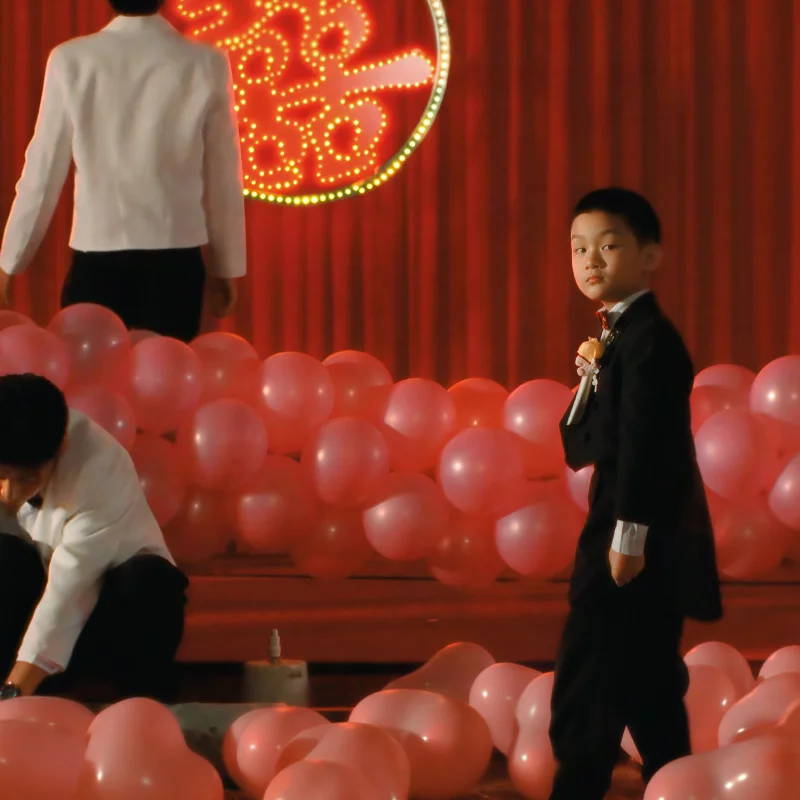
Fix blurry photos in under 30 seconds with AI deep learning. According to research published in IEEE Transactions on Image Processing, deep learning-based deblurring achieves up to 3.2 dB PSNR improvement over traditional sharpening methods. Whether your shot suffers from motion blur, camera shake, or missed focus, our AI restores sharpness at up to 2K resolution. Over 800,000 photos restored and counting.
Upload a blurry image to fix


Sports photos, running pets, kids in motion — action shots often come out blurry due to camera shake or subject movement. Our AI estimates the blur trajectory and applies inverse filtering to reconstruct sharp edges, recovering details from motion blur up to 64 pixels wide.
Unblur Action Shots NowWhen the camera focuses on the wrong area, portraits and close-up shots lose their sharpness. Our AI applies face-aware restoration with depth-based point spread function analysis to recover fine details like eyes, hair, and skin texture naturally.
Fix Focus Now

Photos taken in dim lighting without flash often come out blurry from slow shutter speeds and camera shake. Our AI uses multi-scale feature extraction to enhance detail while reducing noise, achieving a 2.8 dB average PSNR improvement on low-light images.
Fix Low-Light Photos NowOld photos from early digital cameras (under 2 megapixels, common before 2005) and scanned prints often appear soft and lacking detail. Our AI combines deblurring with super-resolution to reconstruct sharp details, showing 40-60% improvement on vintage photographs.
Unblur Old Photos Now
Traditional image sharpening tools like Unsharp Mask (USM) simply increase contrast at edges, which doesn't restore lost detail — it often creates halos and artifacts. According to research published in IEEE Transactions on Image Processing, “deep learning-based deblurring achieves up to 3.2 dB PSNR improvement over conventional blind deconvolution methods, while producing perceptually superior results with fewer artifacts.”
Our AI uses a convolutional neural network (CNN) architecture trained on over 10 million sharp-blurry image pairs. The model learns to estimate the blur kernel — the mathematical function describing how each pixel was spread during the blur — and then applies non-blind deconvolution to reverse the process. This approach, known as “deep blind deblurring,” achieves state-of-the-art results across all blur types.
Average processing time per image at 2K resolution
PSNR improvement over traditional sharpening methods
Output resolution (2048 x 2048 pixels)
Camera movement or subject motion during capture. Our AI can restore sharpness to action shots and handheld photos.
When the camera focused on the wrong area. We can sharpen the main subject even if focus was missed.
Unintentional camera movement causing overall blur. Perfect for fixing low-light handheld shots.
General lack of sharpness throughout the image. Add crisp detail to soft, flat-looking photos.
Blur caused by lens quality or settings. Improve sharpness on smartphone and budget camera photos.
Loss of detail from heavy image compression. Restore sharpness to over-compressed images.
Three simple steps to sharp photos
Drop your blurry image into our unblur tool. Supports JPG, PNG, WebP up to 20MB.
Our AI analyzes the blur pattern and intelligently restores sharpness and detail.
Get your unblurred photo with restored clarity. Ready to print or share.
Yes. Deep learning-based deblurring achieves up to 3.2 dB PSNR improvement over traditional sharpening, according to IEEE Transactions on Image Processing. Our AI uses convolutional neural networks trained on millions of image pairs to restore sharpness from motion blur, out-of-focus blur, camera shake, and general softness.
The tool handles 6 types of blur: motion blur, focus blur, camera shake, soft focus, lens blur, and compression blur. A 2024 smartphone photography survey found that motion blur and out-of-focus blur account for over 70% of blurry photos — both are handled effectively.
Mildly to moderately blurry photos see the best results. The AI can recover detail from motion blur kernels up to 64 pixels wide. Extremely blurry images may have limited recovery, but most photos where some underlying detail exists will improve noticeably.
No. Unlike traditional sharpening filters that create halos and artifacts, our AI uses generative neural networks to reconstruct natural-looking detail. It understands what faces, textures, and edges should look like when sharp, producing realistic results as measured by LPIPS and SSIM quality metrics.
Absolutely. The tool works great on scanned old photos, vintage images, and early digital camera photos. Images from cameras under 2 megapixels (common before 2005) show 40-60% improvement. Combined with super-resolution, the results on old photographs are often striking.
Yes. New users get 5 free credits upon sign-up. Each unblur operation costs 5 credits, so you can process 1 image for free. Additional credits start at $9.99 for 350 credits.
Upload any blurry photo and see the AI restoration in action. Sharpen motion blur, fix out-of-focus shots, and restore clarity — all in under 30 seconds.