
FREE
Loading…
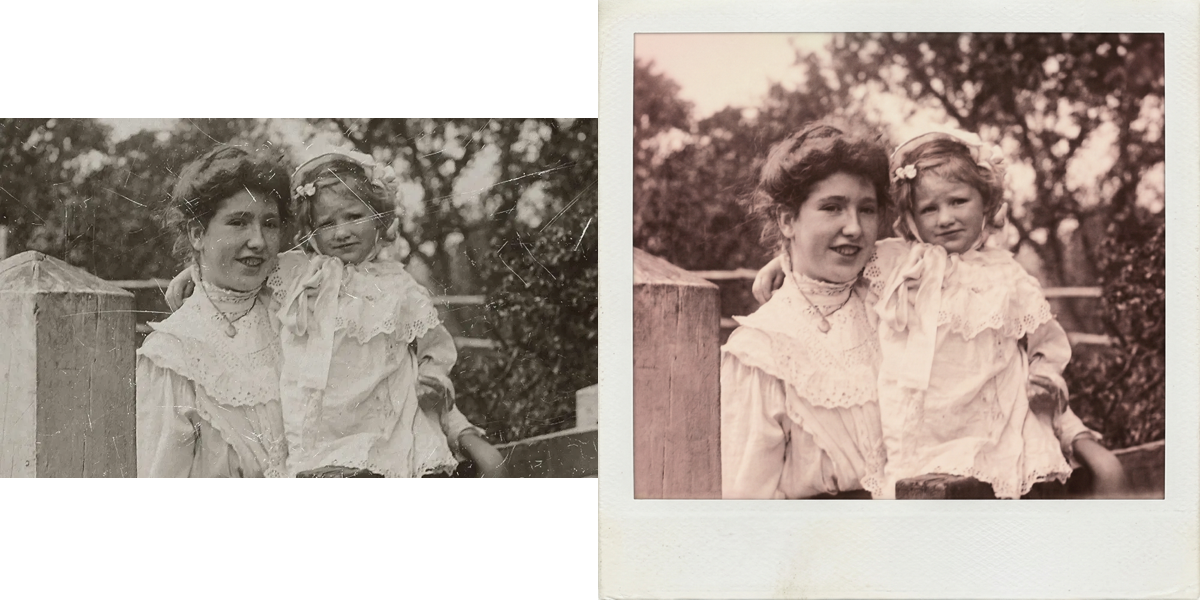
Polaroid instant film has a unique degradation pattern — the integral dye layers fade unevenly, with cyan typically fading fastest, causing an orange-yellow color shift. Surface cracking from the sealed development pod is also common. Our AI understands these Polaroid-specific damage patterns and corrects them accurately.
Upload your damaged photo and get instant AI restoration
Just upload and click to process - no prompt needed
Polaroids Restored
Color Recovery Rate
Average Time
User Rating
AI-powered restoration with professional quality results
The AI understands the unique dye chemistry of Polaroid integral film. SX-70 and 600 film stocks fade differently than standard prints — the cyan dye degrades fastest, leaving an orange-yellow cast. The AI applies targeted correction for this specific color shift pattern.
Polaroid prints develop a distinctive network of fine surface cracks as the sealed development pod chemicals age and dry out. The AI detects these Polaroid-specific crack patterns and fills them in without disturbing the image content beneath.
Many Polaroids were exposed to light during development (despite the "do not shake" advice from Polaroid). This causes uneven fading and color shifts. The AI normalizes the exposure across the entire image, correcting both overexposed and underexposed areas.
Faded Polaroids lose both color saturation and tonal density, appearing washed out and flat. The AI restores the full dynamic range — deep shadows, bright highlights, and the punchy midtone contrast that characterized fresh Polaroid prints.
The white Polaroid border is an iconic part of the format. The AI restores only the image area, leaving the characteristic border intact (or cleaning it if stained), preserving the unmistakable Polaroid look that makes these prints so nostalgic.
Each Polaroid restoration takes about a minute — fitting for a format that was all about instant gratification. Process an entire collection of vintage Polaroids quickly and see your memories come back to life.
Upload a scan or photo of your faded Polaroid. Scanning on a flatbed at 600 DPI gives the best results, but a smartphone photo of the Polaroid also works. JPG, PNG, and WebP up to 20MB.
Click restore. The AI analyzes the specific type of Polaroid degradation — color shifts, fading, surface cracks — and applies targeted corrections to recover the original vivid instant film colors.
Preview the color-corrected Polaroid and download in high resolution. The restored image retains the characteristic Polaroid aesthetic with fresh, vibrant colors.
Polaroid integral film (SX-70, 600, Spectra) uses a fundamentally different process than conventional photography. Instead of separate negative and print stages, the image develops inside a sealed chemical pod between layers of the print. The Polaroid Corporation's own research documented that the three dye layers (cyan, magenta, yellow) degrade at different rates — cyan is the least stable, fading first and causing the characteristic orange-yellow color shift seen in aged Polaroids. This uneven fading requires color-channel-specific correction, which our AI provides.
Yes, Polaroids from the 1970s (SX-70 film) and 1980s (600 film) are among the most commonly restored. These are now 40-50+ years old and typically show significant fading. Polaroid historian Christopher Bonanos notes in his book "Instant: The Story of Polaroid" that SX-70 prints from this era were never designed for permanence — the integral film chemistry was optimized for instant development, not archival longevity. Our AI can recover impressive amounts of color and detail from these decades-old instant prints.
Surface cracking is a common issue with aged Polaroid prints. It occurs as the reagent chemicals in the sealed development pod dry out and contract over decades, causing the top plastic layer to crack. The pattern is distinctive — typically a fine network of irregular lines, different from the linear cracks seen in conventional photo emulsions. Our AI recognizes this Polaroid-specific damage pattern and fills in the cracks while preserving the image beneath.
Include the white border in your scan for best results. The AI uses the border as a reference point for white balance calibration — comparing the current yellowed/discolored border against what should be pure white helps the algorithm determine exactly how much color correction to apply. Scanning at 600 DPI on a flatbed scanner gives optimal results for the small Polaroid format (3.1 x 3.1 inch image area).
The common practice of shaking Polaroid prints (despite Polaroid's advice against it) can cause uneven chemical distribution, resulting in blotchy color development and inconsistent exposure across the image. The AI can correct these irregularities by normalizing the color and exposure values across the frame. While severely shaken prints with chemical smearing may have limited recoverability, moderate shaking damage responds very well to AI correction.
Yes. While Fujifilm Instax uses a different film chemistry than original Polaroid, the degradation patterns are similar — uneven dye fading and potential surface issues. Instax photos are generally newer and better-preserved than vintage Polaroids, but they can still benefit from color correction and enhancement. The AI adapts to the specific color profile of whatever instant film format you upload.
Recover vibrant colors from all types of faded photographs
Remove yellow tint and age discoloration from old photographs
Comprehensive AI restoration for all types of old photo damage
Add realistic color to monochrome photographs
Remove water stains and moisture damage from photographs
Start for free. No credit card required.