
FREE
Loading…
Check if an image was made by AI in seconds — your first check is free when you sign up.
Drop an image here or click to upload
JPG, PNG or WEBP · up to 10 MB · 3 credits per check · first check free when you sign up
An AI image detector is a tool that estimates whether a picture was created by an AI generator such as ChatGPT, Gemini or Midjourney rather than taken with a camera. sparkpix checks two things: the provenance labels AI tools write into the file, and the image content itself.
27 / 28
right on our own test set of real and AI photos
2
layers: file metadata, then pixel analysis
2–3 s
typical analysis time
3 credits
per check — your first check is free when you sign up
Including the ones below. The verdict works on all of them; naming the exact tool is best-effort and depends on what the file or the detector can confirm.
Step 1
Drop a JPG, PNG or WEBP up to 10 MB. Files are checked as uploaded — no compression — so embedded AI labels survive.
Step 2
First we look for C2PA Content Credentials and IPTC “AI-generated” labels in the file. Then a classifier scores the pixels themselves.
Step 3
You get an AI percentage, a verdict, a confidence level, any watermark found and — when the file or the detector names one — the tool that made it.
| AI score | Verdict | Confidence | Meaning |
|---|---|---|---|
| 85–100% | AI Generated | High | Strong signs of AI generation in the pixels |
| 60–84% | Likely AI | Medium | Several traits typical of AI images |
| 40–59% | Uncertain | Low | Mixed signals — treat as unknown |
| 16–39% | Likely Real | Medium | Few signs of AI generation |
| 0–15% | Real Photo | High | No meaningful signs of AI generation |
If the file declares itself AI-generated in its metadata, the verdict is AI Generated regardless of the pixel score; if it declares an AI edit, the verdict is Digitally Edited.
| Image checked | Result | Why |
|---|---|---|
| A photorealistic street or food scene generated by GPT Image 2 | 99% AI · AI Generated · High confidence | Caught by pixel analysis; no AI metadata survived in the file. |
| The real Flickr photograph that scene was modelled on | 0% AI · Real Photo · High confidence | No AI traits, no AI labels in the file. |
| A file carrying an IPTC “trainedAlgorithmicMedia” label | 99% AI · AI Generated · Watermark: AI label in image metadata | Decided by the file’s own declaration. |
| A C2PA-signed test image from the Content Authenticity Initiative | Content Credentials detected, with the tool that signed it | Credentials prove provenance; they don’t by themselves mean AI. |
| Metadata (C2PA / IPTC) | Pixel analysis | |
|---|---|---|
| What it reads | C2PA Content Credentials and IPTC DigitalSourceType labels embedded in the file | The image content itself: texture, noise, structure |
| When it answers | Only if the file still carries the label | Always |
| How certain | Decisive when present — the maker declared it | A probability; strongest on well-known generators |
| Survives screenshots / social uploads | Usually not — platforms strip metadata | Yes, mostly — trained on re-encoded and resized images |
| Who writes it | OpenAI, Adobe, Microsoft, Google and other C2PA members | — |
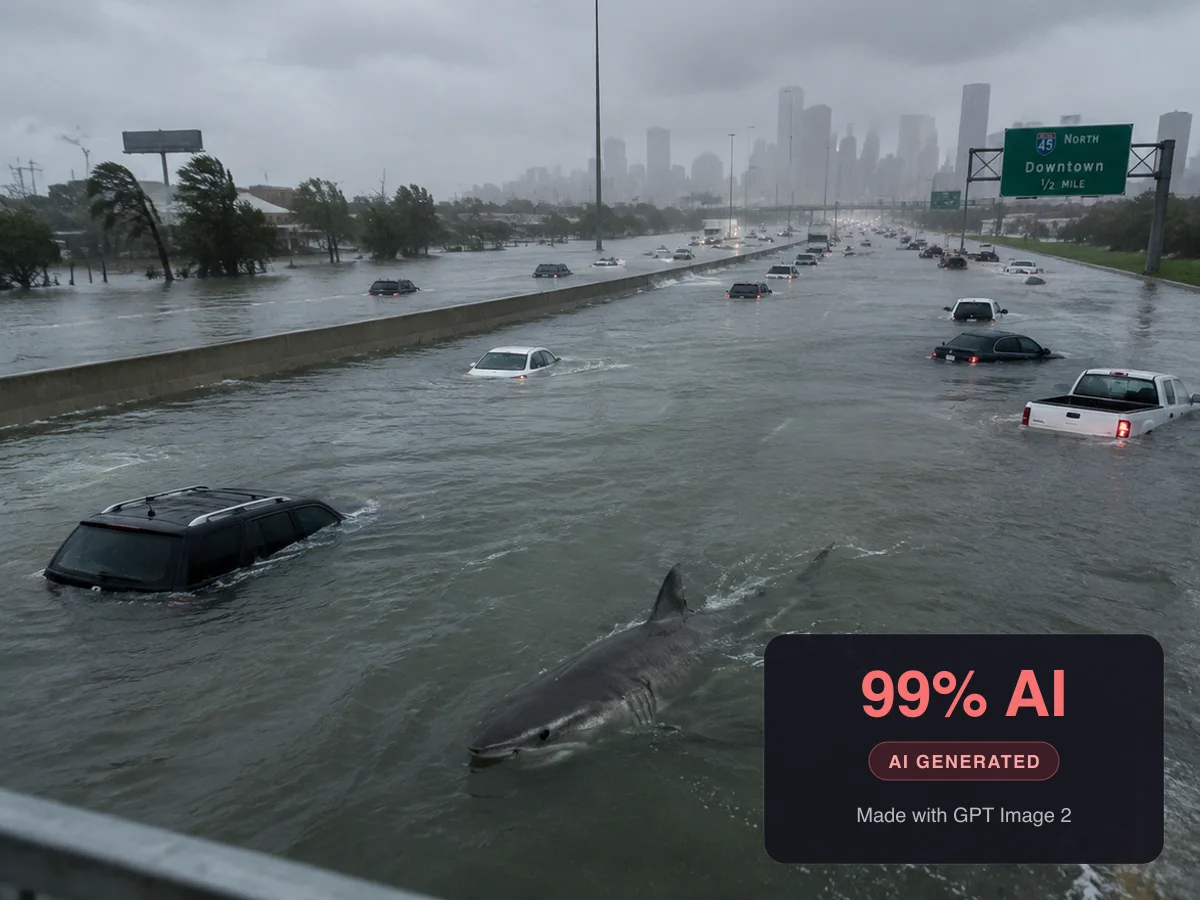
Disaster and breaking-news images spread fastest in the first hours, before anyone has checked them. The shark swimming down a flooded highway above was generated with GPT Image 2 from a single sentence, in seconds — and our detector scored it 99% AI.
Check an image before you share, report or reply to it. Pixel analysis still works on screenshots and re-posted copies that have lost their metadata; pair the result with a reverse image search and a look at who posted it first.
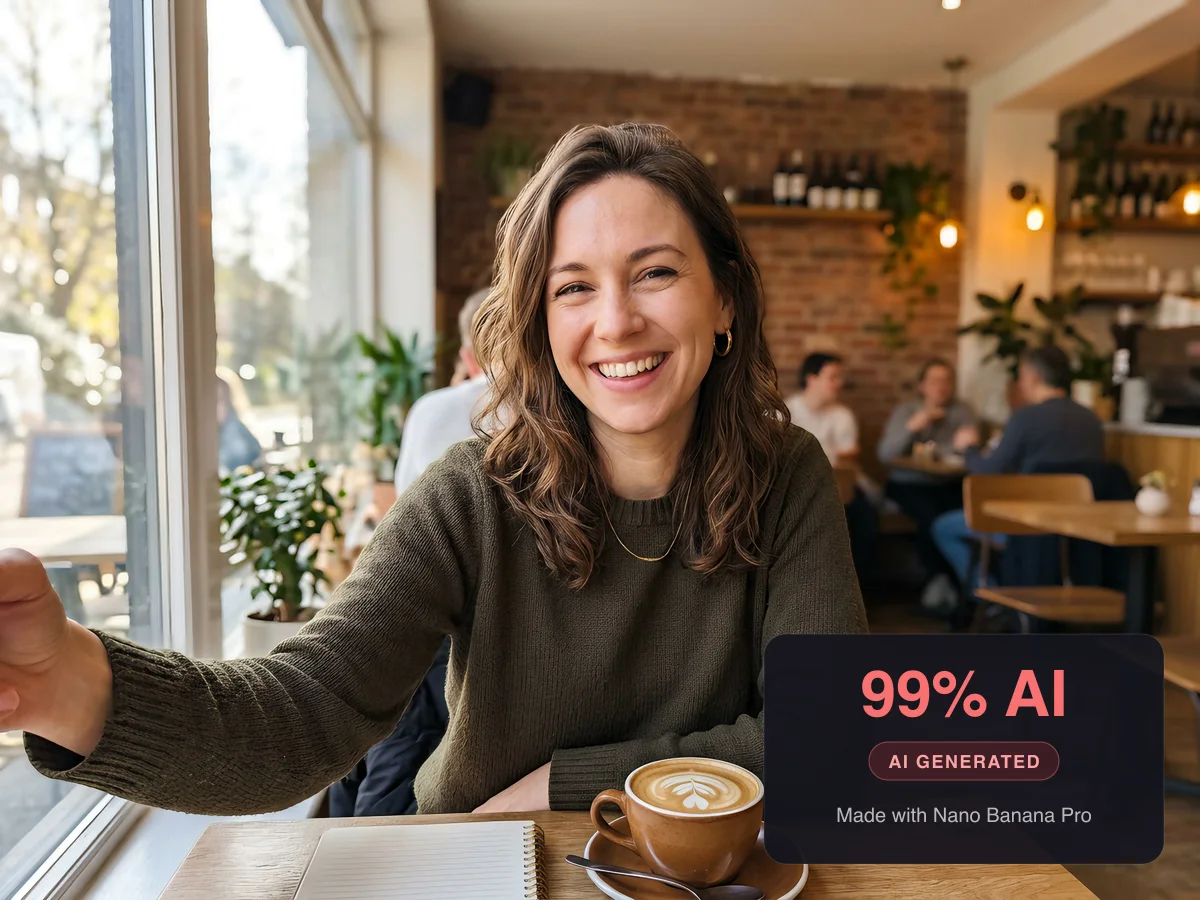
Fake accounts and romance scams increasingly use generated faces of people who do not exist. This café selfie was made with Nano Banana Pro; our detector scored it 99% AI.
A reverse image search finds nothing for a face that was generated from scratch, because the photo has never been posted anywhere before. The detector looks at the pixels instead, so it can flag the profile even when the photo is brand new.
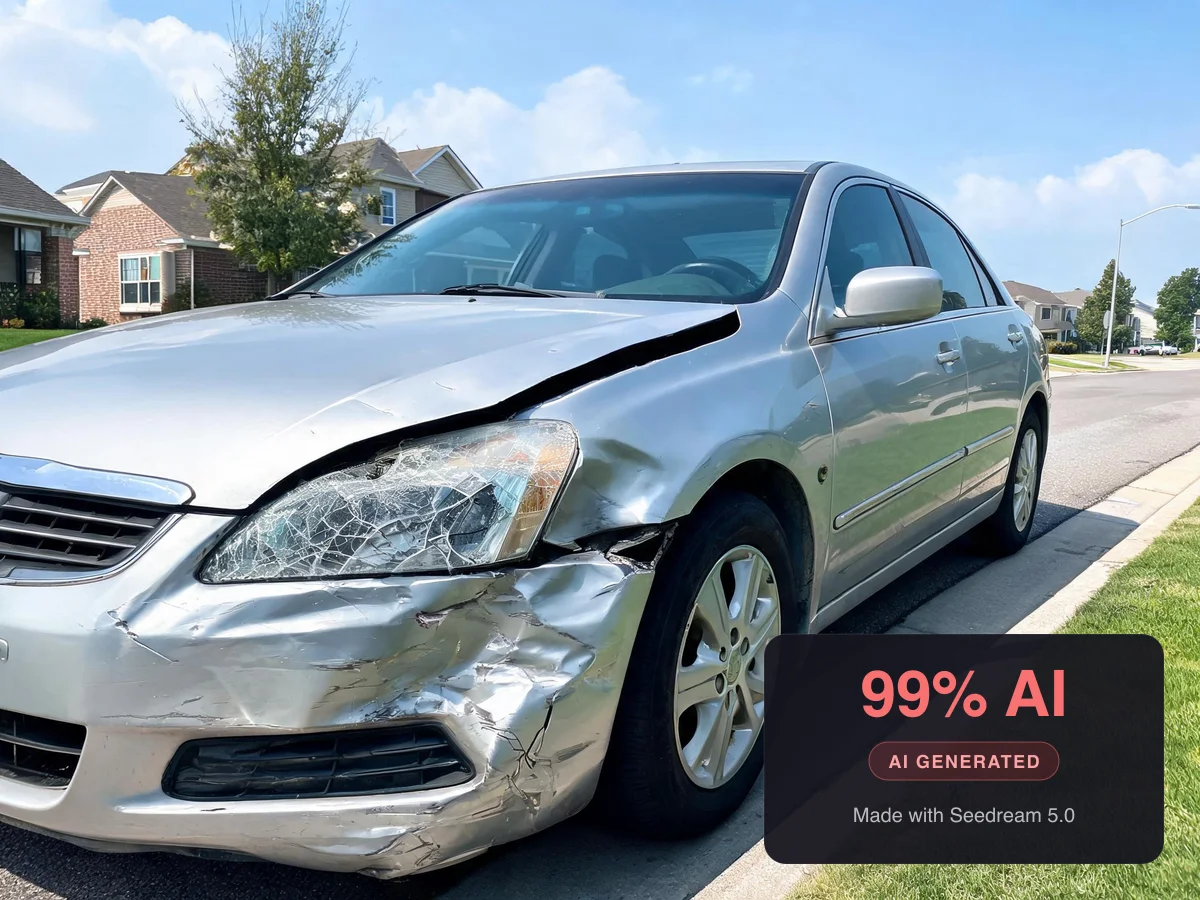
A dented bumper, a broken parcel, a cracked phone screen: claim photos are easy to generate now. This “accident” was made with Seedream 5.0 in one prompt, and our detector scored it 99% AI.
Run claim and refund photos through the detector before approving them, and ask for the original file where you can — originals keep C2PA Content Credentials that a screenshot or chat app strips.
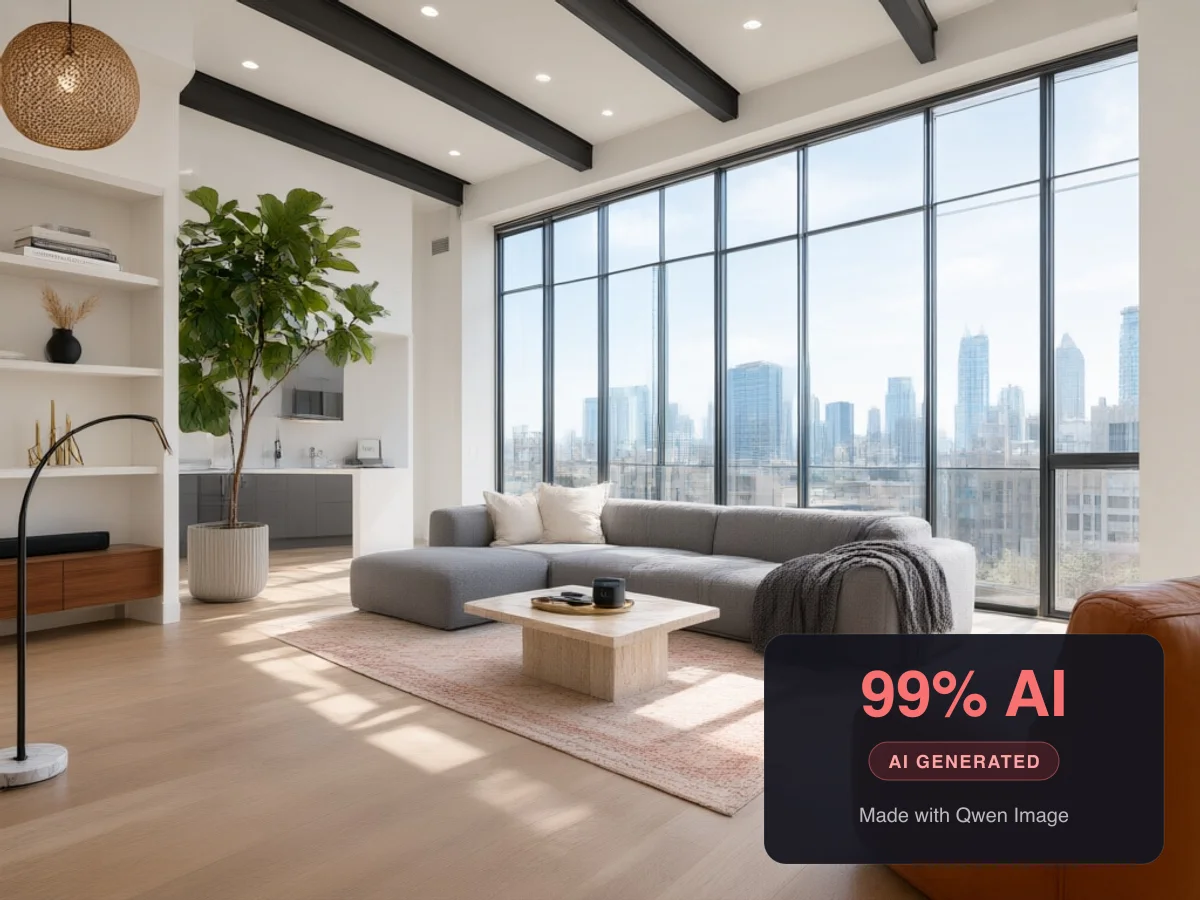
Rental scams collect deposits for places that do not exist, and fake product listings show items that were never photographed. This loft was generated with Qwen Image; our detector scored it 99% AI.
Before paying a deposit or an unfamiliar seller, check the listing photos. A strong AI score on a “real estate photo” is a clear reason to insist on a video tour or an in-person viewing.
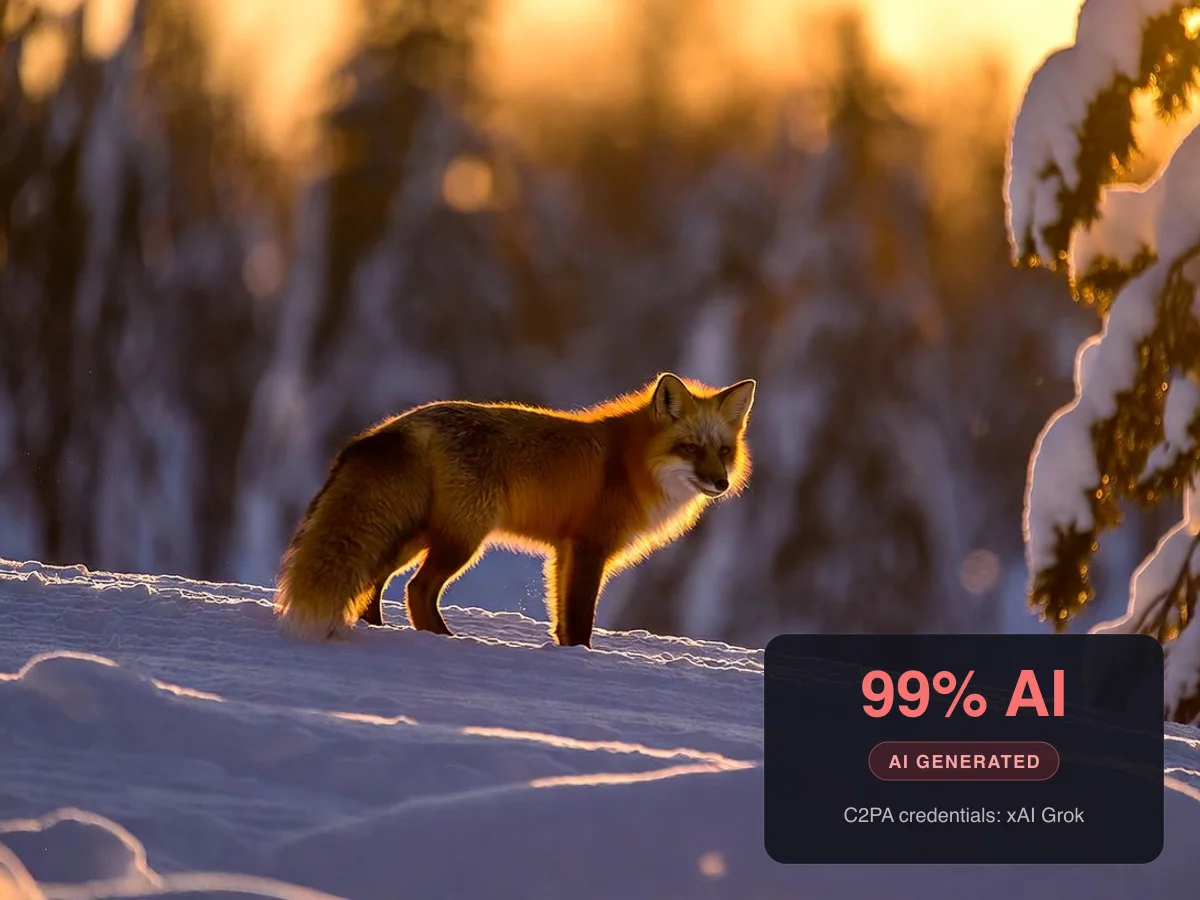
Photo contests, stock agencies and classrooms often ban AI images. This fox at sunrise was made with Grok Imagine — and it still carried C2PA Content Credentials naming xAI Grok, so the detector read the answer straight from the file.
When credentials are present the verdict is decisive; when they have been stripped, pixel analysis takes over. Screening every submission takes a few seconds per image.
On our own test set — 14 AI images from GPT Image 2 and Gemini plus the 14 real photos they were paired with — it got 27 of 28 right: no real photo was flagged, and one AI image passed as real. Newer generators can be harder to catch than that. Social platforms strip C2PA and IPTC labels, so a screenshot or re-upload loses the metadata layer. Google’s SynthID watermark has no public detection API yet, so we don’t claim to read it. Use the result as one strong signal, alongside where the image came from.
Want to test your own eye first? Try Real or AI — two photos, pick the real one.
In two layers. It first reads the file for C2PA Content Credentials and IPTC “trained algorithmic media” labels, which OpenAI, Adobe, Google and others embed in images their tools create. It then runs a pixel classifier that scores how likely the image is AI-generated and which generator it most resembles.
Your first check is free: new accounts get 5 credits and a check costs 3. After that, credit packs start at $9.99 for 350 credits — about 116 checks. If a check fails, the credits are refunded automatically.
It is the detector’s estimate that the image is AI-generated: 85% or more reads as AI Generated, 60–84% as Likely AI, 40–59% as Uncertain, 16–39% as Likely Real and 15% or less as Real Photo. It is a probability, not proof.
It checks images from any generator, including ChatGPT (GPT Image), DALL·E, Google Gemini and Imagen, Midjourney, Flux, Stable Diffusion, Adobe Firefly and Ideogram. We tested it on images from GPT Image 2 and Gemini. Naming the exact tool is best-effort: it is reliable when the file carries C2PA Content Credentials, and often not possible otherwise.
It reports “Digitally Edited” when the file’s metadata says AI was used to edit it. Pixel analysis may also flag heavily AI-edited photos. It is not a dedicated face-swap deepfake detector.
It can happen, especially with heavily filtered or retouched photos. In our own test none of 14 real photos was flagged, while 1 of 14 AI images passed as real. Treat a single result as a signal, not a verdict.
Uploaded images are stored only to run the check and are deleted automatically within 3 days. We do not use them to train models.
Last updated: September 24, 2026 · Sources: C2PA specification (c2pa.org), IPTC Digital Source Type vocabulary, sparkpix test of 28 images (September 2026).